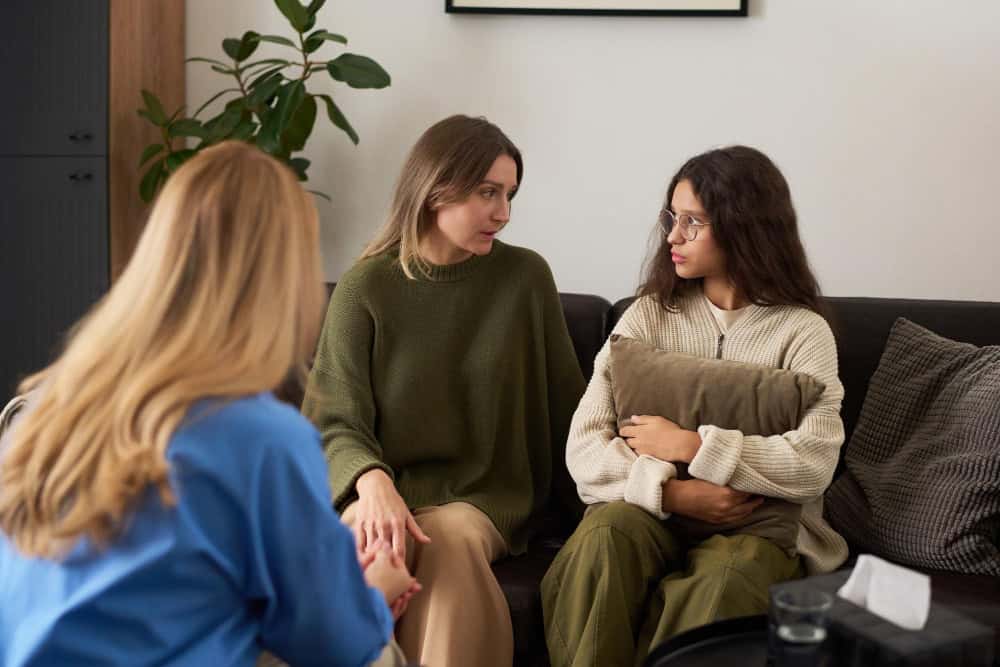
Between school pickups and a parent’s appointments, your own care slides to the bottom of the list. At 1Eleven Behavioral Health, women’s rehab in Greensboro, North Carolina starts with an assessment of your history, your schedule, and your household. We treat addiction and mental health together. You can meet us at our Greensboro facility, with its private therapy rooms and quiet reflection space. Video visits reach women anywhere in the state. Nobody will ask you to say more than you’re ready to share.
Why Do Women Face Different Barriers to Starting Treatment?
Childcare comes first. If a program runs most weekdays, somebody has to cover school drop-off, daycare pickup, and the call from the nurse’s office. A woman who also looks after an aging parent has even less room in the day. Work adds its own problem, since a day away from the office means explaining where you were. Guilt makes every one of those problems heavier. Leaving your family for care can feel like abandoning them, even when it helps them most.
Cost is the other question behind many stalled first calls. You can verify your insurance online before you commit to a visit. Coverage depends on your plan, and many private plans may cover our partial hospitalization program (PHP) and intensive outpatient program (IOP). In your assessment, we map out who depends on you and when. Virtual programs follow the same structure as in-person care, so you can skip the drive across Greensboro. Plan for a full day, though, because virtual PHP runs as long as the in-person schedule.
What Does Research Say About Women and Substance Use?
According to the National Institute on Drug Abuse’s Substance Use in Women research report, women may be more susceptible to craving and relapse. NIDA describes both as stages of the addiction cycle. The report lists difficulty finding child care as a barrier to treatment. It also ties heavy drinking to a higher risk of violence and sexual assault for women. For this reason, every assessment should include a trauma history. NIDA published the report in April 2020, and it remains the most recent available edition.
Anxiety shows up in the same research. The report finds that women with marijuana use disorder have more panic attacks and anxiety disorders than men with the disorder. Women are also more likely than men to misuse prescription opioids to self-treat anxiety or tension. When anxiety drives the substance use, we treat anxiety and the substance use in one plan. Treating only one of them leaves the other free to restart the cycle.
What Does a Women’s Track Look Like in Treatment?
A women’s track gives women a group of their own inside a larger program. Women in a track still get the same assessment and individual therapy as everyone else. What changes is who sits in the room for group work and which topics the group covers. Programs that run a track build it around two things: group makeup and trauma-informed structure.
Who Is in the Group and What It Covers
A trained facilitator leads a women-only group, and every woman in the room is at a similar stage of care. Sessions typically run 60 to 90 minutes. The first few minutes go to a check-in on mood and cravings. After this, the group covers one topic and closes with a plan for the hardest hour of the coming week. Topics include boundaries in relationships, parenting stress and guilt, body image, and pregnancy and postpartum recovery. Sleep, pain, and anxiety medications get their own discussion.
How Trauma-Informed Structure Works
Trauma-informed care starts before the group does. A facilitator tells you what the session will cover, so no topic arrives as a surprise. You can pass on a question, and nobody asks you to tell your story to stay in the group. When a topic hits hard, the group practices grounding: slow breathing or naming five things you can see in the room. At 1Eleven, the same approach runs through every program, and you decide what you share and when.
Which Therapies Support Women in Treatment?
Your therapy plan comes out of the assessment and changes as you make progress. We build it with you, and you have a say in the order. Early weeks lean on coping skills for cravings and stress. Later weeks leave room for harder conversations with a partner or a parent. We draw on four therapies in particular for these situations.
- Individual therapy: private one-on-one sessions with a licensed clinician. You choose where to start, whether that’s trauma, substance use, or stress at home.
- Family therapy: sessions with a partner or a parent in the room, led by a clinician, to rebuild trust and communication.
- Group therapy: therapist-led sessions with peers in similar situations. You practice coping skills out loud and hold each other to the plan.
- Cognitive-behavioral therapy (CBT): a method for spotting thought patterns tied to anxiety, depression, and substance use, then checking them against the facts.
Medication management sits alongside therapy when your plan calls for it. The plan itself stays open to change. When your work schedule shifts or a court date lands on the calendar, we adjust session times and goals with you. If you’ve been through another program, tell us what helped and what didn’t, and we start from there.
Programs for Women’s Addiction and Mental Health Care
For women’s rehab in Greensboro, North Carolina, we run two program levels in person and online. A partial hospitalization program is the most structured outpatient option and fills most weekdays. An intensive outpatient program uses fewer hours, so work and family can keep their place in your week. Both levels have virtual versions for women anywhere in the state. Your assessment decides which level fits.
Addiction Treatment for Women in North Carolina
We don’t offer detox onsite. If your withdrawal will require medical management, we’ll connect you with a partner detox facility, after which you’ll transfer to PHP or IOP. Addiction treatment for women in North Carolina covers alcohol, opioids, stimulants, and prescription drugs like benzodiazepines. If it’s appropriate for your individual plan, we can also provide medication-assisted treatment. Medication-assisted treatment will be used to treat any underlying mental health issue, as we treat both issues simultaneously.
Mental Health Treatment for Women in North Carolina
Mental health treatment for women in North Carolina starts with your own timeline of symptoms. The Women and Mental Health page from the National Institute of Mental Health reports that depression and anxiety disorders are more common in women. NIMH last reviewed it in April 2024. The same page describes three forms of depression tied to hormonal change: perinatal depression, premenstrual dysphoric disorder, and perimenopausal depression. If your low mood began during pregnancy or tracks with your cycle, say so at your assessment. Those details change how we plan your depression care.
What Happens After You Call?
You call or fill out our web form, and a coordinator schedules your confidential assessment. We ask about your history and current symptoms, including any substance use. We then write the plan with you, and your goals guide our pace. You can bring questions you have about scheduling and coverage that day as well.
Rehab for women in Greensboro, NC is more successful when you work out logistics like pick-up times, shifts, and who is covering the house while you are in the program each day. We then lay out level-of-care options that fit the number of hours your week can accommodate. If we don’t think we are a good fit, we’ll let you know.